
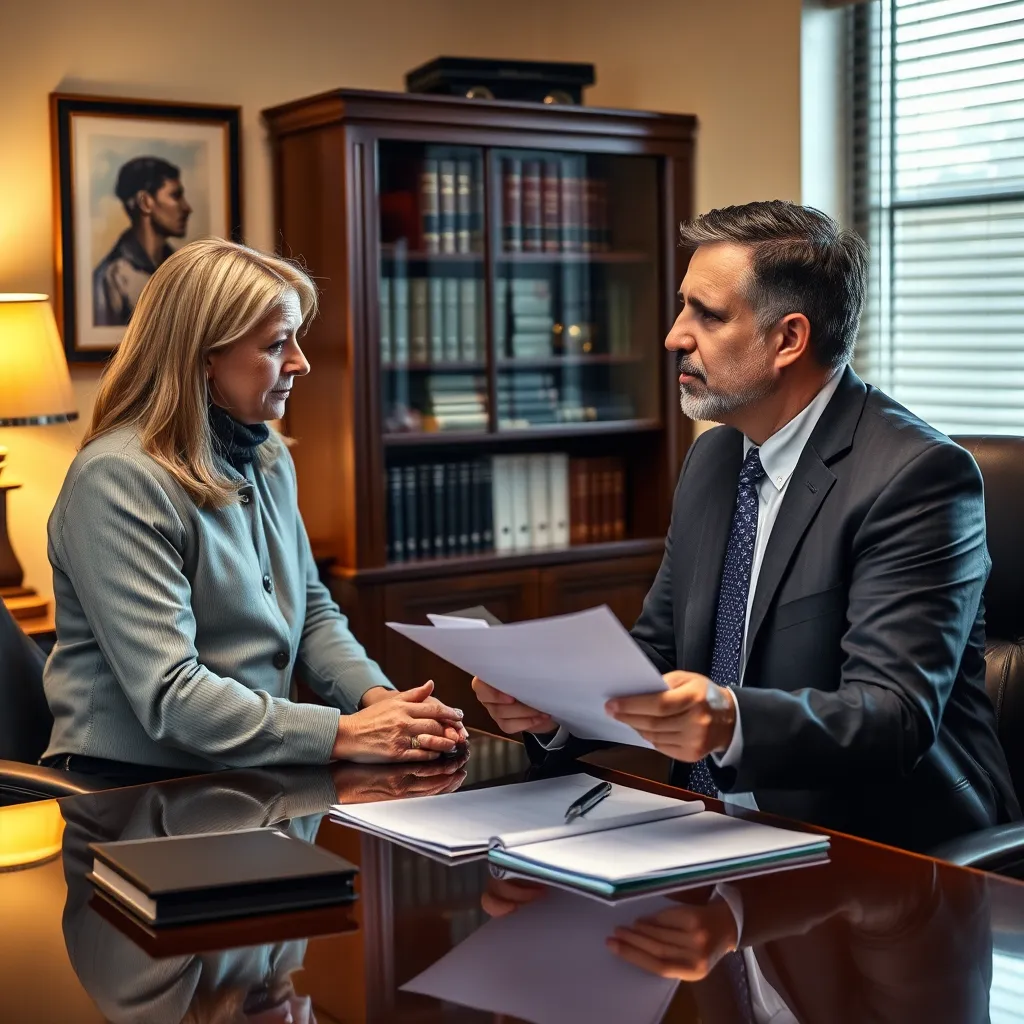
Felony Conviction Divorce Lawyer Roanoke, VA
When a spouse is convicted of a felony and sentenced to serve more than one year in prison, Virginia law permits the other spouse to file for divorce on fault grounds without waiting for the no-fault separation period. For residents of Roanoke and the surrounding region, a felony conviction divorce raises questions about timing, property division, child custody, and how the criminal case may influence the family law proceeding. Law Offices Of SRIS, P.C. provides representation to individuals in Roanoke, Salem, Vinton, and across the Roanoke Valley who are considering or already pursuing a divorce based on a spouse’s felony conviction. From our Fairfax location, we serve clients throughout Virginia, and our attorneys are experienced in the intersection of criminal and family law. We work with clients to navigate the procedural steps, address any concerns about the incarcerated spouse’s rights, and focus on reaching a fair resolution under Virginia’s equitable distribution framework. To discuss your situation with an attorney, contact Law Offices Of SRIS, P.C. at (888) 437-7747. By appointment only. Law Offices Of SRIS, P.C. – Advocacy Without Borders.
What Felony Conviction Divorce Means in Roanoke, VA
In Virginia, a divorce may be granted on the fault ground of felony conviction when one spouse has been sentenced to confinement for more than one year after conviction of a felony. This ground, set out in Va. Code § 20-91, allows the innocent spouse to move forward with a divorce immediately, without the six-month or one-year separation period required for a no-fault divorce. The divorce case is filed in the circuit court where either spouse resides. For Roanoke residents, that court may be the Roanoke City Circuit Court or the Roanoke County Circuit Court, depending on the county or city of residence. The circuit court has exclusive original jurisdiction over divorce suits under Va. Code § 20-96.
Under Virginia Code § 20-91, a spouse may file for divorce on the fault ground of felony conviction when the other spouse has been sentenced to confinement for more than one year for a felony.
Source: Va. Code § 20-91. Va. Code § 20-91
Reviewed by Mr. Sris, admitted in VA/MD/DC/NJ/NY.
In Virginia, the circuit court has exclusive original jurisdiction over all suits for divorce, including those based on felony conviction.
Source: Va. Code § 20-96. Va. Code § 20-96
Reviewed by Mr. Sris, admitted in VA/MD/DC/NJ/NY.
Once the divorce petition is filed, the court must address all ancillary matters such as equitable distribution of marital property, spousal support, and, if minor children are involved, custody and child support. The fact that one spouse is incarcerated can affect settlement negotiations, the valuation of marital assets, and the logistical arrangements for hearings. In many cases, the incarcerated spouse may participate by telephone or video conference, and representation by counsel is permitted. The procedural landscape can be complex, particularly when the criminal conviction is recent or when there are pending appeals.
How Mr. Sris and His Of Counsel Handle Felony Conviction Divorce Cases
Mr. Sris and his Of Counsel are experienced in handling divorce cases that involve a spouse’s incarceration. We file the divorce complaint in the appropriate circuit court, serve the complaint on the incarcerated spouse in accordance with court rules, and work to move the matter forward even while one party is in custody. Our attorneys coordinate with prison officials and court scheduling to ensure that hearings are conducted efficiently. We advise clients on the likely timeline, which varies depending on the court’s calendar, whether the incarcerated spouse contests the divorce, and how the parties address custody and property division.
Virginia is an equitable distribution state. When the court divides marital property, it considers factors such as the duration of the marriage, the contributions of each spouse, and the circumstances surrounding the divorce. A felony conviction and incarceration can influence the court’s consideration of certain statutory factors. Mr. Sris and his Of Counsel present a complete picture of the marital estate and the relevant equitable-distribution factors to help the court reach a fair outcome. Because the divorce is fault-based, the court may also weigh the fault ground when determining spousal support. Our approach is to guide the client through each step, explain the legal standards, and advocate for a result that protects the client’s interests.
About Mr. Sris and His Of Counsel Team
Mr. Sris is the Owner and Founder of Law Offices Of SRIS, P.C. A former prosecutor, he founded the firm in 1997 and has practiced in the areas of family law and criminal defense for more than two decades. Mr. Sris testified before the Virginia House Courts of Justice Committee in support of 2019 HB 635 (chief patron Del. David Bulova). His understanding of both criminal law and family law provides clients with insight when the two areas intersect. He is admitted to practice in Virginia, Maryland, the District of Columbia, New Jersey, and New York.
Mr. Sris works alongside a team of Of Counsel attorneys who contribute their own experience in family law matters. Together, they bring a multi-state perspective to every case. The firm’s approach is to provide each client with individual case review and to develop a strategy that fits the client’s specific circumstances. From our Fairfax location, we serve individuals throughout Virginia, including residents of Roanoke, Salem, and the surrounding communities.
Frequently Asked Questions
What is felony conviction divorce in Virginia?
A felony conviction divorce in Virginia is a fault-based divorce available when one spouse has been convicted of a felony and sentenced to confinement for more than one year. Under Va. Code § 20-91, this ground allows the innocent spouse to file immediately, without waiting for the statutory separation period. The divorce petition is filed in the circuit court. The court must still address property division, support, and custody if applicable.
How does a felony conviction affect property division in a Virginia divorce?
A felony conviction can influence the equitable distribution of marital property because the court may consider the circumstances and factors that contributed to the dissolution of the marriage. Virginia courts classify property as marital, separate, or hybrid, and then distribute it equitably under Va. Code § 20-107.3. The incarcerated spouse’s reduced ability to contribute to the acquisition or maintenance of property, and the impact of the conviction on the marital relationship, are among the factors the court may weigh. An attorney can explain how these considerations apply to your case.
Do I need a lawyer for a felony conviction divorce in Roanoke?
While you are not required by law to hire an attorney, the complexities of a fault-based divorce involving an incarcerated spouse make it advisable to seek legal guidance. The procedural steps, service of process on a prisoner, coordination with the correctional facility, and the interplay between the criminal conviction and the divorce issues require familiarity with both family law and Virginia court practice. An experienced attorney can help you protect your rights and work toward a resolution that addresses property division, spousal support, child custody, and visitation.
What are the residency requirements for divorce in Virginia?
Under Va. Code § 20-97, at least one party must have been a bona fide resident and domiciliary of Virginia for at least six months before filing for divorce. This requirement applies regardless of whether the divorce is fault-based or no-fault. If you live in Roanoke or have established domicile elsewhere in Virginia, you must meet this six-month threshold before the court will accept the case. An attorney can confirm whether you satisfy the residency requirement based on your specific situation.
Can the incarcerated spouse contest the divorce?
Yes, an incarcerated spouse has the right to contest the divorce and may retain counsel to represent them. The court will provide the incarcerated spouse with an opportunity to participate in the proceeding, usually by video or telephone. If the incarcerated spouse challenges the grounds for divorce, the court will hold a hearing at which both sides may present evidence. Resolving contested issues—such as property classification or custody—may extend the timeline, but it does not prevent the divorce from proceeding.
How does a felony conviction divorce affect child custody in Virginia?
A Virginia court determines child custody based solely on the best interests of the child, and a parent’s incarceration is one factor the court will consider among the ten statutory factors under Va. Code § 20-124.3. Incarceration does not automatically terminate parental rights, but it can affect the non-incarcerated parent’s ability to obtain sole legal custody and may limit the incarcerated parent’s visitation while serving their sentence. The court evaluates each parent’s relationship with the child, the child’s needs, and the ability of each parent to care for the child. An attorney can help you present a custody plan that serves your child’s best interests.
For guidance on your specific situation, reach Law Offices Of SRIS, P.C. at (888) 437-7747.
Related Family Law Pages:
Roanoke City family law attorney |
Roanoke County divorce lawyer |
Roanoke divorce lawyer |
Salem City family law lawyer
For additional legal resources, see the Virginia Code Title 20 (Domestic Relations) and information about Virginia Circuit Courts.
Attorney advertising. Prior results do not guarantee a similar outcome.
Case results depend on a variety of factors unique to each case.