
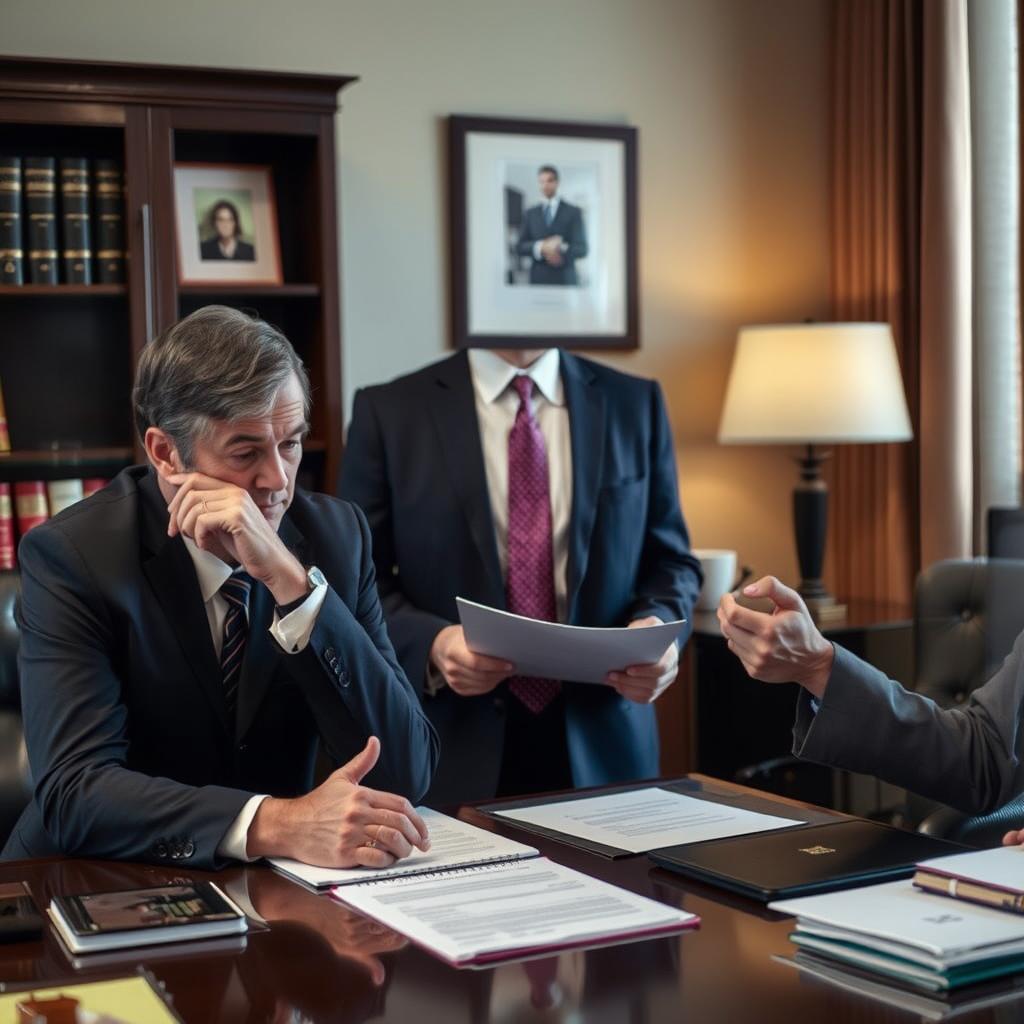
Money Laundering lawyer Roanoke, VA
If you are facing a federal money laundering investigation or indictment in Roanoke, Virginia, the stakes could not be higher. Federal money laundering charges—whether as a standalone offense or as part of a larger conspiracy—carry the potential for substantial prison time, heavy financial penalties, and long-term damage to your personal and professional reputation. The U.S. Attorney’s Office for the Western District of Virginia, with offices in Roanoke, prosecutes these cases actively, often deploying the full resources of the FBI, IRS Criminal Investigation, DEA, and other federal agencies. When your freedom and financial future are on the line, you deserve experienced representation that understands federal court practice in Roanoke. Mr. Sris and his Of Counsel at Law Offices Of SRIS, P.C. Concentrate their practice on federal criminal defense and have been representing clients in federal court for many years. To request a consultation, call (888) 437-7747.
Federal Money Laundering Charges in Roanoke, Virginia
Money laundering is a federal offense that involves conducting financial transactions with the proceeds of unlawful activity. The most commonly charged federal statute is 18 U.S.C. § 1956, which makes it a crime to engage in transactions designed to conceal the source, ownership, or control of funds derived from a “specified unlawful activity”—a broad category that includes drug trafficking, fraud, racketeering, and many other offenses. Federal prosecutors in the Western District of Virginia routinely pursue money laundering counts alongside the underlying substantive crimes, and they often add conspiracy charges under 18 U.S.C. § 1956(h), which carries the same potential consequences as the completed offense.
A Roanoke federal money laundering case typically begins with an investigation led by a federal agency, followed by an indictment secured through a grand jury. Once charged, you will appear before a magistrate judge at the U.S. District Court for the Western District of Virginia, Roanoke Division. The proceedings can involve detention hearings, complex discovery, pretrial motions, and, if necessary, trial. Because the federal system operates under the United States Sentencing Guidelines, even a conviction on a single count can expose you to a guideline range that may result in a lengthy term of imprisonment. Notably, there is no parole in the federal system, and good‑time credit is limited. These realities make it critical to retain counsel who is familiar with the local rules, the Assistant U.S. Attorneys handling the docket, and the expectations of the District Court judges.
Mr. Sris and his Of Counsel serve Roanoke residents as well as individuals from surrounding communities such as Salem, Vinton, Botetourt County, Franklin County, Craig County, and the broader Southwest Virginia region. Our firm appears regularly in federal court and understands how to challenge the government’s evidence, negotiate with prosecutors, and, when appropriate, present a vigorous defense at trial.
How Mr. Sris and His Of Counsel Handle Federal Money Laundering Cases
Every federal money laundering matter demands a defense strategy that is tailored to the specific allegations and the evidence the government has assembled. The approach we take typically involves several key phases:
Early intervention and investigation. The period before an indictment—or immediately after an arrest—is often the most consequential phase of a federal case. Mr. Sris and his Of Counsel work quickly to understand the scope of the investigation, interview potential witnesses, and evaluate the strength of the government’s financial records. Early engagement may allow us to persuade the U.S. Attorney’s Office not to pursue charges, or to negotiate a pre‑indictment resolution that minimizes exposure.
Challenging the money laundering elements. A conviction under 18 U.S.C. § 1956 requires the government to prove beyond a reasonable doubt that the financial transaction involved proceeds of a specified unlawful activity, that the defendant knew the funds were tainted, and that the transaction was intended to promote the unlawful activity, conceal its nature, or avoid a reporting requirement. We scrutinize each element carefully. For instance, if the government cannot trace the funds to a predicate offense, or if the defendant lacked the requisite knowledge, the charge may not stand. We also examine whether the transaction was merely spent funds from a legitimate source, which does not amount to money laundering.
Pretrial motions and discovery. Federal criminal discovery is governed by the Federal Rules of Criminal Procedure, and we file motions to compel production of exculpatory evidence, to suppress evidence obtained in violation of the Fourth Amendment, or to dismiss counts that fail to state an offense. In money laundering cases, the government often relies on voluminous bank records, financial analyses, and testimony from cooperating witnesses. We retain forensic accountants and other attorneys where necessary to review the government’s financial reconstruction and to identify alternative, innocent explanations for the transactions at issue.
Negotiation and sentencing advocacy. Many federal money laundering cases resolve through plea agreements. Mr. Sris and his Of Counsel have extensive experience negotiating with federal prosecutors to obtain the most favorable resolution possible under the circumstances—whether that means pleading to a lesser offense, securing a cooperation agreement that reduces exposure, or arguing for a variance from the sentencing guidelines based on mitigating personal circumstances.
Trial preparation. If a trial is the right path, we are prepared to present a complete defense. Our team has familiarity with the federal courtroom in Roanoke and the procedures of the Western District. We handle voir dire, cross-examination of government witnesses, and the presentation of defense evidence with a focus on creating reasonable doubt on one or more essential elements of the offense.
Because the consequences of a federal money laundering conviction can alter the course of your life, we encourage you to reach out as soon as you become aware of an investigation. Early involvement of counsel often makes a significant difference in the outcome.
About Mr. Sris and His Of Counsel Team
Mr. Sris, Owner and Founder of Law Offices Of SRIS, P.C., has practiced law since 1997. A former prosecutor, he brings a distinctive perspective to federal criminal defense—understanding how the government builds its cases and where those cases are vulnerable. Mr. Sris is admitted to practice in Virginia, Maryland, the District of Columbia, New Jersey, and New York, and he has represented individuals and businesses in federal court throughout his career. Mr. Sris testified before the Virginia House Courts of Justice Committee in support of 2019 HB 635 (chief patron Del. David Bulova), demonstrating his long‑standing commitment to the Virginia legal community. He keeps his personal caseload manageable so that he can remain deeply involved in every matter the firm accepts.
Mr. Sris is joined by a team of Of Counsel—experienced litigators who collaborate on case strategy, legal research, and courtroom advocacy. The collective experience of Mr. Sris and his Of Counsel allows the firm to handle complex federal financial crime cases with the depth of resources they require. At the same time, we maintain direct, personal communication with every client, so you know exactly who is working on your case and what to expect at each stage.
Frequently Asked Questions
What is federal money laundering?
Federal money laundering is the process of conducting a financial transaction with the proceeds of a crime in order to conceal the illegal origin of the money or to promote further criminal activity. Under 18 U.S.C. § 1956, the government must prove that the defendant knew the funds came from a specified unlawful activity—such as drug trafficking, fraud, or racketeering—and that the transaction was intended to disguise that source or to advance the illegal scheme. Money laundering charges are often brought alongside the underlying crime, and they carry severe potential consequences.
Do I need a lawyer if I am under investigation for money laundering in Roanoke?
Yes, absolutely. Federal investigations move quickly, and speaking to agents without counsel can inadvertently provide the government with evidence it would not otherwise obtain. An experienced federal criminal defense lawyer can communicate with the investigating agency on your behalf, help you understand the scope of the investigation, and work to prevent charges from being filed. Even if you have not been arrested, retaining counsel at the earliest possible stage is one of the most important steps you can take to protect yourself.
Where would a federal money laundering case be tried in the Roanoke area?
Money laundering cases arising in the Roanoke area are typically prosecuted in the U.S. District Court for the Western District of Virginia, Roanoke Division. The court is located in downtown Roanoke and handles all stages of federal criminal proceedings—from initial appearances and detention hearings through trial and sentencing. Our firm appears regularly in the Roanoke Division and is familiar with the procedures and expectations of the court.
Can I be charged with conspiracy to commit money laundering even if I did not complete the offense?
Yes. Federal law criminalizes conspiracy to commit money laundering under 18 U.S.C. § 1956(h), and a conspiracy charge does not require proof that the money laundering was actually carried out. The government need only show that two or more people agreed to launder money and that the defendant knew of and joined the agreement. Conspiracy charges are common in federal financial crime prosecutions because they allow the government to hold each participant responsible for the entire scope of the scheme.
How do money laundering cases differ from other federal criminal charges?
Money laundering cases are uniquely document‑intensive and often involve complex financial records, multiple transactions, and cooperating witnesses. The government typically presents bank statements, wire transfer records, business ledgers, and testimony from accountants in an effort to prove that funds were moved in a way designed to conceal their illegal source. Defending these cases requires a sophisticated understanding of financial tracing, federal sentencing guidelines, and the strategies that federal prosecutors use to tie multiple transactions together into a single narrative of criminal intent.
What should I bring when I meet with a lawyer about a money laundering matter?
You should bring any documents you have received from law enforcement or the court, including subpoenas, search warrants, or target letters. If you have already been charged, bring the indictment and any discovery materials the government has provided. It is also helpful to prepare a brief timeline of relevant events and to make a list of any individuals who may have information about the transactions at issue. Do not attempt to gather documents that the government may view as evidence without first consulting counsel, as doing so could inadvertently affect the case structure.
Primary‑Source Authority
For direct reference:
- 18 U.S.C. § 1956 – Money Laundering (Cornell Legal Information Institute)
- United States District Court for the Western District of Virginia
- U.S. Department of Justice – Money Laundering and Asset Recovery Section
Contact Law Offices Of SRIS, P.C.
For a consultation about a federal money laundering matter in Roanoke or elsewhere in Virginia, call (888) 437-7747. Mr. Sris and his Of Counsel are available by appointment at our Fairfax location and serve clients throughout the Commonwealth.
Attorney advertising. Prior results do not guarantee a similar outcome. Results may vary.
Case results depend on a variety of factors unique to each case.