
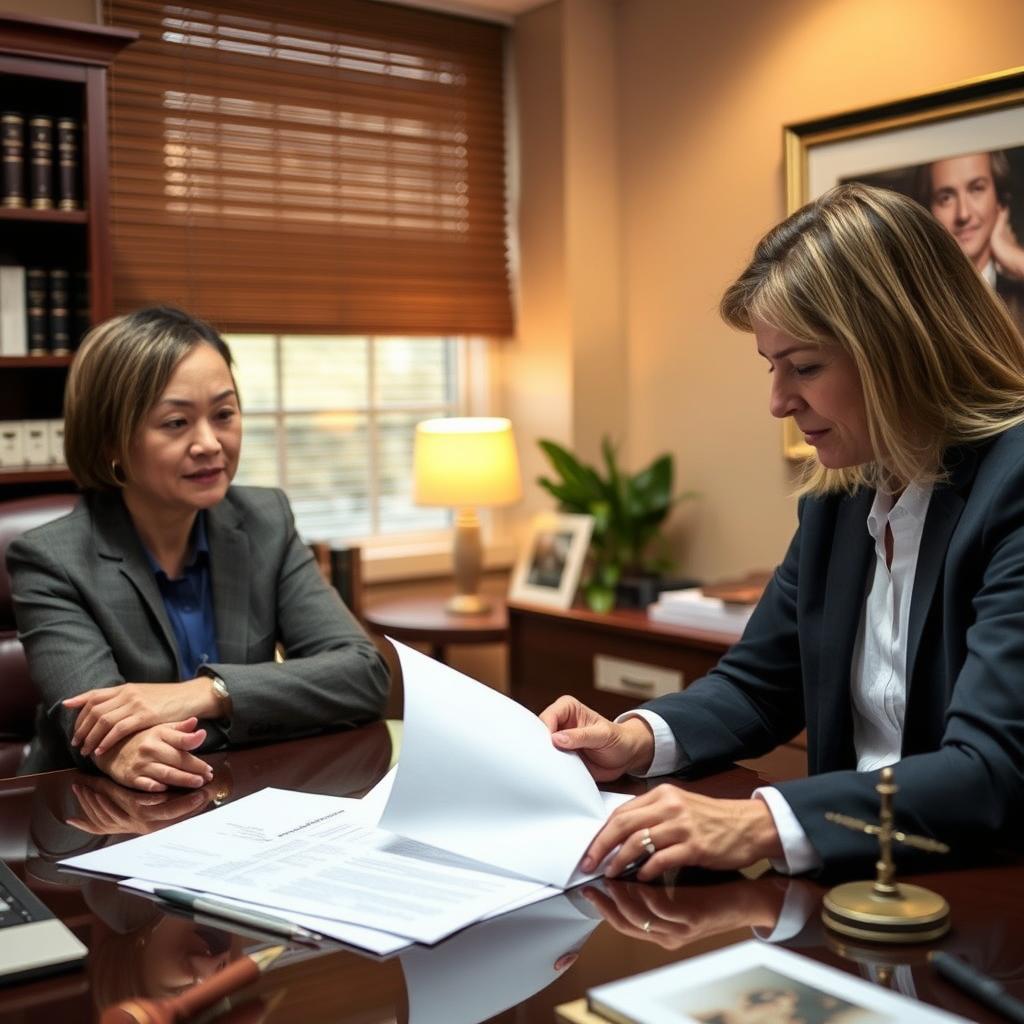
Alimony Modification Lawyer Bedford County, VA
Reviewed by Mr. Sris, Owner and Founder Law Offices Of SRIS, P.C. – Advocacy Without Borders.
Admitted in Virginia, Maryland, the District of Columbia, New Jersey, and New York
Practicing since 1997
When a spousal support order no longer reflects the financial reality of either party, a modification may be warranted. Virginia law permits adjustment of alimony when there has been a material change in circumstances that was not contemplated at the time of the original order. For residents of Bedford County and the surrounding communities — including Bedford, Forest, Smith Mountain Lake, and Moneta — modification proceedings are heard in the Bedford County Circuit Court at 123 East Main Street, Suite 202, Bedford, VA 24523. Mr. Sris, a former prosecutor and the Owner and Founder of Law Offices Of SRIS, P.C., concentrates a significant portion of his practice on family law matters, including post-divorce alimony disputes. Whether you are the payor seeking a reduction or the recipient seeking an increase, an experienced attorney can evaluate the change in circumstances under Va. Code § 20-107.1 and help you present a persuasive case to the court. To discuss your situation, reach the firm’s Shenandoah/Woodstock location at (888) 437-7747.
What Alimony Modification Means in Bedford County
Alimony modification in Virginia is governed by the factors set out in Va. Code § 20-107.1, which the court applies when determining whether a spousal support award should be increased, decreased, or terminated. The Circuit Court for Bedford County handles all divorce and equitable distribution matters, and it retains continuing jurisdiction over spousal support orders entered in divorce proceedings. A modification is not automatic; the party seeking the change must file a motion and demonstrate that a material change of circumstances has occurred — for example, a substantial and involuntary decrease in income, the retirement of one party, or a significant increase in the recipient’s earning capacity.
Local practice in Bedford County follows the same statutory framework applicable throughout Virginia. The court will examine the 13 factors listed in § 20-107.1, including the current needs of each party, the ability of the payor to continue the support, the duration of the marriage, and the contributions of each spouse to the family’s well-being. Because the Bedford County Circuit Court sits in the Twenty-fourth Judicial District, judges familiar with the economic profile of the region — which includes a mix of agricultural, manufacturing, and service-industry employment — often bring a practical understanding of local wage scales and living costs to the analysis. A property settlement agreement that already addresses modifiability can influence the outcome; if the agreement contains a clear non-modification clause, the burden on the moving party becomes heavier. Mr. Sris and the firm’s Of Counsel attorneys regularly appear at the courthouse on East Main Street and are familiar with the procedural expectations of the Bedford County bench.
How Mr. Sris and the Firm’s Of Counsel Attorneys Handle Alimony Modification Cases
When a client contacts the firm about spousal support modification, the first step is a thorough review of the existing court order and any separation or property settlement agreement that underlies it. The attorney identifies whether support was designated as modifiable, whether a specific duration was set, and what financial circumstances were assumed at the time of the last order. The client provides current income documentation, tax returns, pay stubs, and evidence of any job loss, medical condition, or change in household composition. Because modification motions often involve disputes over the completeness and accuracy of financial disclosures, the firm works to assemble a clear factual record that supports the asserted change of circumstances.
If the motion is contested, the case proceeds under the rules of the Bedford County Circuit Court. The firm prepares the motion and notice of hearing, serves the opposing party, and engages in discovery when necessary. Many alimony modification disputes benefit from negotiation or mediation; the firm’s attorneys routinely explore settlement options that can avoid a contested hearing. Should a hearing be required, the attorney presents evidence of the changed circumstances, including testimony from the client and, where helpful, from vocational or financial attorneys. Throughout the process, the client receives guidance on the realistic range of possible outcomes based on the specific facts and the applicable statutory factors. The goal is always a resolution that reflects the current financial situation of both parties while protecting the client’s long-term interests.
About Mr. Sris and the Firm’s Of Counsel Attorneys
Mr. Sris founded Law Offices Of SRIS, P.C. in 1997 and has built a multi-state practice with admissions in Virginia, Maryland, the District of Columbia, New Jersey, and New York. A former prosecutor, he brings an extensive understanding of courtroom procedure and evidence to family law litigation. Mr. Sris testified before the Virginia House Courts of Justice Committee in support of 2019 HB 635 (chief patron Del. David Bulova), a bill that addressed spousal support and equitable distribution issues. Mr. Sris and the firm’s Of Counsel attorneys bring extensive combined legal experience. Results may vary.
The firm’s Of Counsel attorneys contribute additional depth in litigation and family law matters, and the firm serves Bedford County clients from its Shenandoah/Woodstock location at 505 N Main St, Suite 103, Woodstock, VA 22664. All consultations are by appointment; call (888) 437-7747 to schedule.
Frequently Asked Questions
What is alimony modification in Virginia?
Alimony modification is a court proceeding to change an existing spousal support order based on a material change in circumstances since the last order was entered. Under Va. Code § 20-107.1, either the payor or the recipient may petition the Bedford County Circuit Court to increase, decrease, or terminate support. The moving party must prove that the change was not anticipated at the time of the original award. Common examples include a substantial involuntary job loss, a significant increase in the recipient’s income, remarriage of the recipient, or the payor’s retirement. The court weighs the same statutory factors it would consider in an initial support determination, with a focus on current financial realities.
How do I modify spousal support in Bedford County?
You must file a motion to modify spousal support with the Bedford County Circuit Court and serve it on the other party. The motion should state the specific change in circumstances you are alleging and the relief you seek — an increase, a decrease, or termination. The court then sets a hearing date. Both sides exchange financial information, and the judge evaluates whether a material change has occurred. If the parties agree on the modification, they can submit a consent order for the court’s approval. Having an attorney familiar with Bedford County court procedures helps ensure the motion is properly drafted and supported by admissible evidence.
What are the grounds for modifying alimony in Virginia?
Virginia courts modify alimony when a party demonstrates a material change in circumstances that was not foreseen at the time of the last support order. The factors listed in Va. Code § 20-107.1 guide the court’s decision. Grounds commonly include a permanent and involuntary loss of employment, a substantial decrease in the payor’s income, a significant increase in the recipient’s earning capacity, the payor’s retirement, or cohabitation by the recipient in a relationship analogous to marriage. The change must be more than a temporary setback or a minor fluctuation. The court will also consider whether the original support order or a separation agreement expressly limits modification.
Can I stop paying alimony if I lose my job?
Not automatically; you must petition the court for a modification before you can legally stop or reduce payments. Even a job loss that substantially reduces your income is a material change, but the obligation continues until the court issues a new order. Ceasing payments without court approval can lead to contempt proceedings, wage garnishment, or a judgment for arrears. The trusted course is to file a modification motion as soon as the income reduction becomes apparent. The Bedford County Circuit Court can consider an expedited hearing if the circumstances are urgent, but you should never unilaterally stop paying support without first consulting an attorney.
Do I need a lawyer for alimony modification in Bedford County?
You are not legally required to have a lawyer, but the procedural and evidentiary requirements make experienced representation advisable. Proving a material change of circumstances requires more than simply asserting that your finances have changed. You must present financial documentation, possibly expert testimony, and persuasive argument anchored in the statutory factors. An attorney can identify the strongest legal arguments, ensure all required disclosures are made, and represent you at the hearing. An attorney familiar with the Bedford County Circuit Court also understands local scheduling practices and judicial expectations, which can affect the presentation of your case.
For guidance on your specific situation, reach Law Offices Of SRIS, P.C. at (888) 437-7747.
Related family law representation in other Virginia localities:
Family law representation in Roanoke |
Divorce lawyer serving Lynchburg |
Child custody attorney in Danville India is not a signatory to the 1980 Hague Convention on Civil Aspects of International Child Abduction.
Virginia primary sources:
Va. Code § 20‑107.1 — Spousal Support Factors |
Virginia Circuit Courts
Attorney advertising. Prior results do not guarantee a similar outcome. Results may vary.
Engaging Law Offices Of SRIS, P.C. Requires a signed engagement agreement.
© 1997-2026 Law Offices Of SRIS, P.C.
Case results depend on a variety of factors unique to each case.