
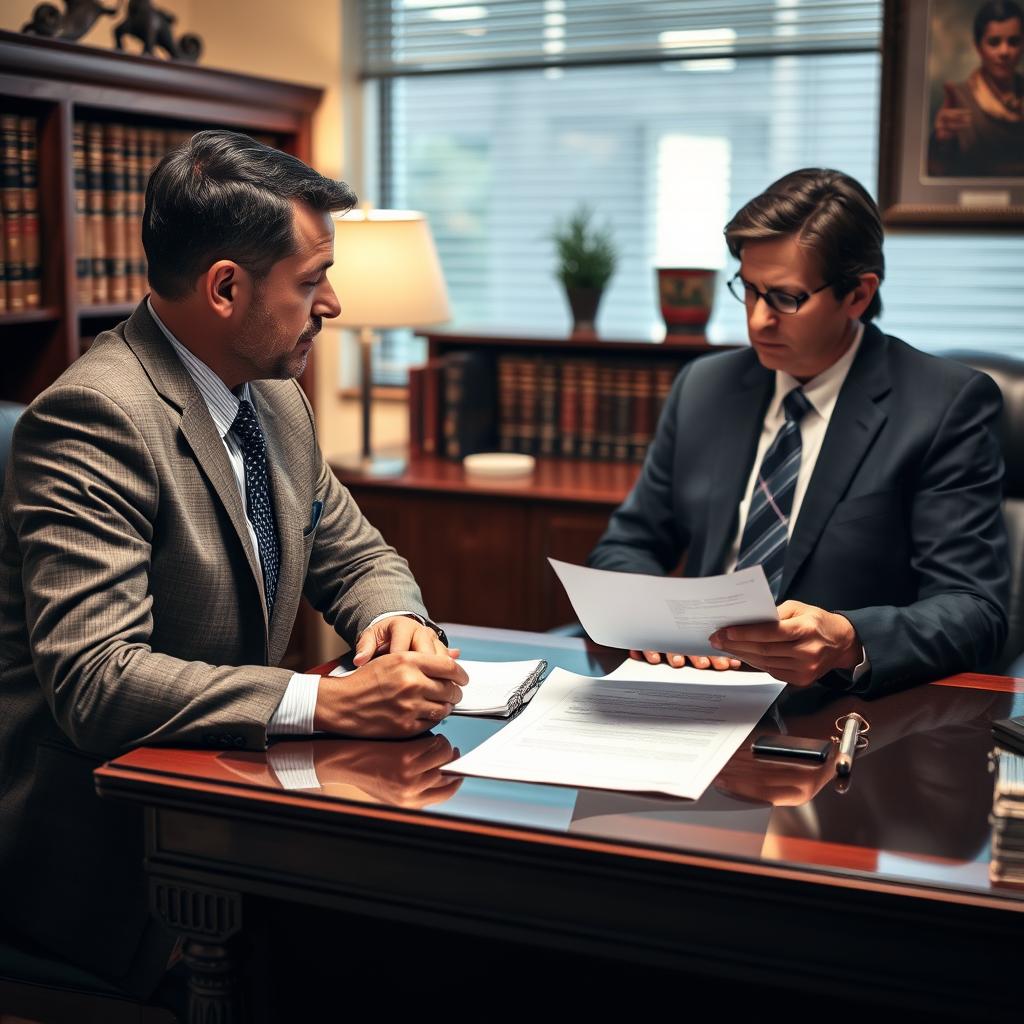
Extortion lawyer Bedford County, VA
Federal extortion charges in Bedford County, Virginia, are prosecuted by the United States Attorney’s Office in the Western District of Virginia, not by the local Commonwealth’s Attorney. The bedrock statute — the Hobbs Act, codified at 18 U.S.C. § 1951 — criminalizes obtaining property from another through actual or threatened force, violence, or fear, or under color of official right, when the conduct affects interstate commerce. A conviction carries a maximum sentence of 20 years in federal prison. Federal extortion cases investigated by the FBI, DEA, or other federal agencies often begin with a grand jury subpoena or a target letter before any state-level involvement. Because the U.S. Sentencing Guidelines strongly influence the actual term, the choice of defense counsel at the earliest stage materially affects the guideline calculation and the ultimate outcome. Mr. Sris and the firm’s Of Counsel attorneys represent individuals facing federal extortion allegations throughout Bedford County — including Bedford, Forest, Smith Mountain Lake, and Moneta. Reach Law Offices Of SRIS, P.C. at (888) 437-7747 to schedule a consultation. Law Offices Of SRIS, P.C. – Advocacy Without Borders.
What Federal Extortion Means in Bedford County
Federal extortion under the Hobbs Act is not simply a state crime that happens to be charged federally. It is a distinct offense that requires proof of an effect on interstate commerce — a jurisdictional hook that the government routinely satisfies by showing that the business or individual targeted engaged in any activity that crossed state lines, however minimal. In Bedford County, a rural locality at the intersection of Route 460, Route 122, and Route 221, many local businesses depend on suppliers and customers outside Virginia, making the commerce element readily established. The U.S. Attorney’s Office for the Western District of Virginia prosecutes these cases in the U.S. District Court in Roanoke, Lynchburg, or other divisional courthouses, applying federal procedural rules that differ markedly from those in the Bedford County General District Court or Circuit Court. There is no preliminary hearing in federal court; instead, a detention hearing determines whether the accused remains in custody pending trial, and a grand jury indictment initiates felony charges. The evidentiary standard for detention and the government’s ability to hold a defendant on the grounds of dangerousness — often asserted in extortion cases — are more stringent than in state proceedings.
The presence of federal law enforcement agencies, including the FBI’s field offices in the region, means that an extortion investigation may involve months of covert surveillance, witness interviews, and financial analysis before the first charge is filed. A person who learns they are a target in Bedford County may be confronted with a search warrant executed at their home or business, or a summons to testify before a federal grand jury. Because federal extortion charges frequently carry a presumption in favor of detention, early engagement with experienced federal defense counsel is critical. The firm’s Shenandoah Location serves Bedford County residents, appearing regularly in the Western District of Virginia. From that location, Mr. Sris and the firm’s Of Counsel attorneys work to protect clients’ rights throughout the investigation and prosecution phases, contacting federal agents on behalf of a target, preserving evidence, and building a defense strategy that accounts for the distinct dynamics of the Roanoke and Lynchburg divisions.
How Mr. Sris and the Firm’s Of Counsel Attorneys Handle Federal Extortion Cases
A federal extortion case frequently begins with a target letter or a knock on the door. At that point, what a defendant says to investigators — without counsel present — can become the central evidence in the government’s case. The firm’s approach is to intervene early: engaging the assigned Assistant U.S. Attorney and the case agent, understanding the scope of the investigation, and preventing a client from inadvertently making statements that could implicate them. During the pre-indictment phase, counsel may negotiate a limited-scope cooperation agreement that reduces exposure or, when the evidence permits, present reasons why the government should decline prosecution altogether. This phase operates under tight deadlines; the Speedy Trial Act and the practical urgency of a federal investigation mean that decisions about interview timing, proffer sessions, and detention arguments must be made quickly but deliberately.
Once an indictment is returned, the case moves to the U.S. District Court for the Western District of Virginia. Mr. Sris and the firm’s Of Counsel attorneys review every piece of discovery — often thousands of pages of reports, financial records, and recorded communications — to identify weaknesses in the government’s proof of the essential elements of the Hobbs Act: that property was obtained, that the means involved force, fear, or color of official right, and that interstate commerce was affected. A defense may challenge the sufficiency of the evidence on any of those elements, move to suppress evidence obtained in violation of the Fourth Amendment, or contest the admissibility of statements under the Fifth and Sixth Amendments. The firm also prepares for the possibility of a trial in the Roanoke or Lynchburg division, where local jury pools may have distinct attitudes toward federal authority. Throughout, the goal is to obtain the most favorable guideline range possible, whether through a plea agreement, a challenge to the loss amount, or a departure motion based on acceptance of responsibility or substantial assistance under § 5K1.1 of the Sentencing Guidelines.
About Mr. Sris and the Firm’s Of Counsel Attorneys
Mr. Sris, Owner and Founder of Law Offices Of SRIS, P.C., is a former prosecutor who has practiced federal criminal defense since 1997. He is admitted in Virginia, Maryland, the District of Columbia, New Jersey, and New York, allowing the firm to coordinate multi-jurisdiction federal defense strategies. Mr. Sris testified before the Virginia House Courts of Justice Committee in support of 2019 HB 635 (chief patron Del. David Bulova). The firm’s Of Counsel attorneys include practitioners with decades of experience in federal criminal matters — former state troopers, prosecutors, and trial lawyers — all of whom contract directly with the firm. They bring extensive combined legal experience across the spectrum of federal white‑collar and violent‑crime litigation. Mr. Sris and the firm’s Of Counsel attorneys have represented individuals in federal extortion investigations and trials throughout the Western District of Virginia. Results may vary.
Frequently Asked Questions
What is the difference between state and federal charges?
Federal charges are prosecuted by the U.S. Attorney with generally harsher penalties and no parole. In Bedford County, a state extortion case would be filed in the General District Court or Circuit Court, but federal extortion is handled exclusively in the U.S. District Court for the Western District of Virginia. Federal sentencing guidelines are points-based and advisory, but they still carry significant weight. Unlike Virginia’s state system, the federal system has no parole, and good‑time credits are limited. A federal conviction also triggers different collateral consequences.
What is federal criminal court and how is it different in VA?
Federal criminal court in Virginia is a separate court system where U.S. Attorneys prosecute cases under federal law, with procedures and sentencing rules that differ fundamentally from state courts. In Bedford County, federal matters are heard in the U.S. District Court for the Western District of Virginia, not in the local courthouse on East Main Street. Federal rules of evidence and criminal procedure apply, and juries are drawn from a larger pool spanning multiple counties. The court’s scheduling, motion practice, and plea‑bargaining culture are distinct, making representation by counsel experienced in that specific forum essential.
How do federal sentencing guidelines work in Bedford County, Virginia?
Federal sentencing at U.S. District Court for the Western District of Virginia follows the U.S. Sentencing Guidelines — a points‑based calculation using offense level and criminal history category. While advisory since Booker (2005), the guidelines strongly influence the judge’s sentence. For extortion under the Hobbs Act, enhancements may apply if a firearm was used, a victim suffered bodily injury, or the offense involved a public official. Acceptance of responsibility, substantial assistance to the government, and safety‑valve provisions can reduce the guideline range. A defendant’s individual circumstances and the precise guideline calculation drive the ultimate sentence.
Do I need a federal criminal defense lawyer in Bedford County, Virginia?
Yes, retaining experienced federal defense counsel immediately is critical because federal extortion investigations move quickly, and early decisions can profoundly affect the case’s trajectory. Federal agents from the FBI or other agencies are trained interrogators; statements made without counsel can be used as evidence. Moreover, detention hearings occur shortly after arrest, and the government often argues for pretrial detention in extortion cases. A lawyer familiar with the Western District of Virginia can appear at the initial appearance, argue for release conditions, and begin shaping the defense before an indictment is returned.
How does a Virginia lawyer defend against extortion charges?
Defense strategies for federal extortion in Virginia may challenge the government’s proof that interstate commerce was affected, that property was “obtained” under the Hobbs Act, or that the accused acted with the requisite criminal intent. A lawyer may also move to suppress evidence gathered through an unlawful search or wiretap, challenge the credibility of cooperating witnesses, or contest the loss amount used to calculate the guidelines. In the Western District of Virginia, experienced counsel evaluate the specific facts of each case, often focusing on whether the alleged conduct was merely active negotiation or a legitimate business dispute rather than a criminal act.
What should I do if I am facing extortion charges in Virginia?
If you believe you are under investigation or have been charged with federal extortion, do not discuss the matter with anyone except your attorney, preserve all relevant documents and electronic communications, and contact an experienced federal criminal defense lawyer immediately. Federal agents may seek to interview you; you have the right to have counsel present. Early steps — such as securing grand jury subpoenas, identifying potential witnesses, and evaluating possible cooperation agreements — can substantially affect the direction of the case. Prompt action is essential because federal investigations do not pause while a defendant waits.
For further reading on how federal criminal defense is handled in other Virginia localities, see our pages on Fairfax County federal criminal lawyer, Prince William County federal criminal lawyer, and Manassas federal criminal lawyer.
Primary source references: U.S. District Court for the Western District of Virginia and 18 U.S.C. § 1951 (Hobbs Act).
Attorney advertising. Prior results do not guarantee a similar outcome. Results may vary.
Case results depend on a variety of factors unique to each case.