
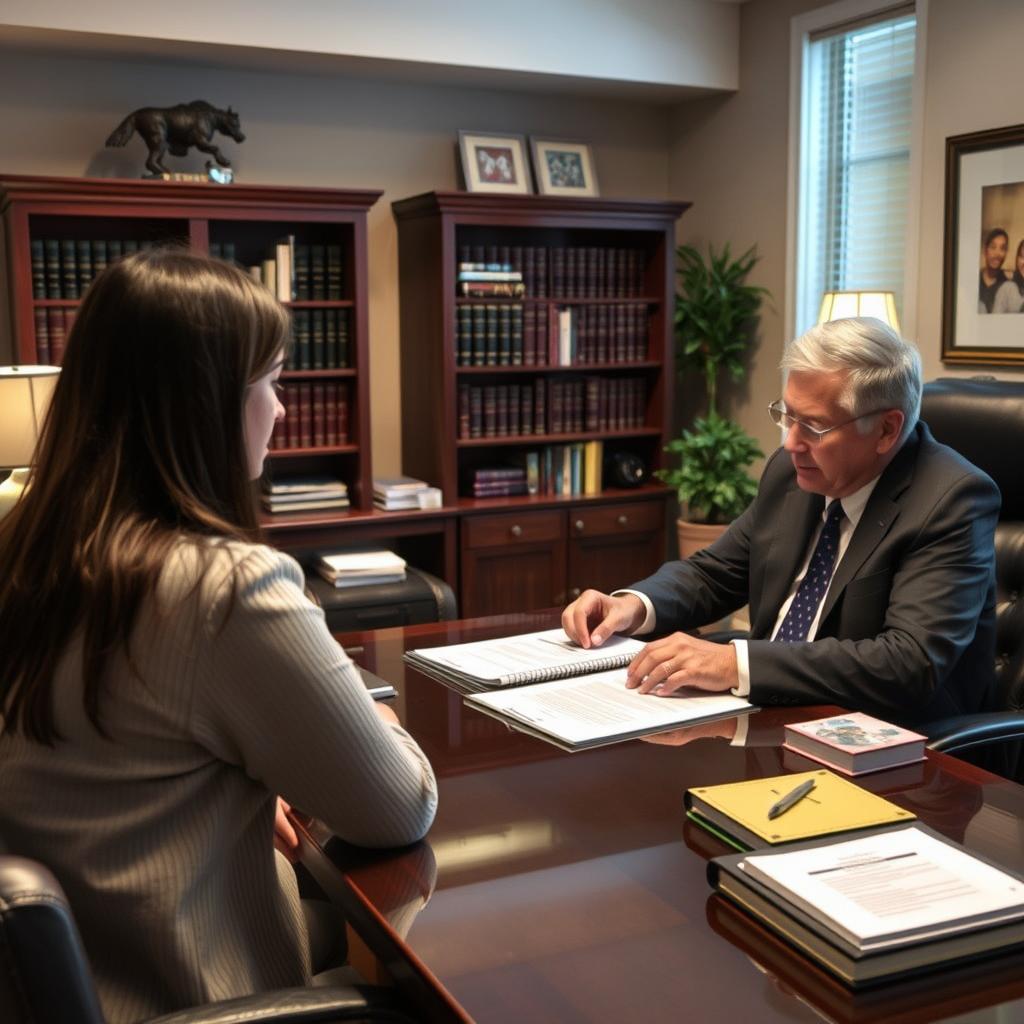
Physical Custody Lawyer Botetourt County, VA
Your son’s room is set up in your Daleville home, and he spends most school nights with you. But now you are facing a custody dispute in Botetourt County, and you are not sure if the court will allow that arrangement to continue. You need an attorney who understands how physical custody decisions work in the Twenty‑fifth Judicial District and who can present your situation clearly to the court. Reach Law Offices Of SRIS, P.C. at (888) 437‑7747.
Strategy Options for Physical Custody in Botetourt County
When parents cannot agree on where a child will live, a Virginia court must step in. Physical custody determines which parent the child resides with on a day‑to‑day basis. Mr. Sris and the firm’s Of Counsel attorneys help parents in Botetourt County develop a strategy that fits their family’s reality. Options range from negotiating a parenting plan that reflects each parent’s schedule to litigating contested custody in the Botetourt County Juvenile and Domestic Relations District Court or, if the custody matter is tied to a divorce, in the Botetourt County Circuit Court.
In many cases, the parties can reach an agreement through direct discussion or mediation. When that is not possible, the firm presents evidence to the court about the child’s needs, each parent’s caregiving history, and any concerns regarding safety or stability. The goal is always a custody arrangement that serves the child’s best interests while protecting the parent‑child relationship.
What To Expect in a Botetourt County Custody Case
The process typically begins when one parent files a petition in the appropriate court. After the petition is served on the other parent, the court may schedule an initial hearing to address temporary custody while the case is pending. Discovery follows, during which each side gathers information about the child’s home environment, school performance, medical care, and each parent’s ability to provide a stable setting.
At a final hearing, the judge evaluates the evidence under the factors listed in Virginia Code § 20‑124.3. The timeline for reaching a final order depends on the court’s calendar and the complexity of the issues. Cases that involve allegations of abuse, substance use, or a parent’s desire to relocate can require additional investigation and take longer to resolve. Throughout the process, Mr. Sris and the firm’s Of Counsel attorneys appear at the Botetourt County Juvenile and Domestic Relations District Court, located at 20 E. Back Street, Suite A, Fincastle, VA 24090, and, when necessary, at the adjacent Circuit Court.
Legal Standards and Consequences in Virginia Physical Custody
Virginia law does not favor one parent over the other based on gender. Instead, the court applies the “best interests of the child” standard, analyzing ten statutory factors. Those factors include the age and physical and mental condition of the child, the relationship between the child and each parent, the role each parent has played in the child’s upbringing, and any history of family abuse. The court also considers the child’s reasonable preference if the child is of sufficient age and maturity.
When a final physical custody order is entered, it carries the full weight of the court. If a parent violates the order—for example, by refusing to return the child after a scheduled visit—the other parent can seek enforcement through a show‑cause proceeding. The court has the authority to modify custody, impose makeup parenting time, or award attorney fees. Because physical custody orders directly affect where a child sleeps, goes to school, and spends holidays, getting the original order right is critical. Mr. Sris and the firm’s Of Counsel attorneys work to establish a practical, durable arrangement that minimizes future conflict.
About Mr. Sris and the Firm’s Of Counsel Attorneys
Mr. Sris, Owner and Founder of Law Offices Of SRIS, P.C., has practiced law since 1997. A former prosecutor, he brings courtroom experience to every family law matter. He testified before the Virginia House Courts of Justice Committee in support of 2019 HB 635 (chief patron Del. David Bulova). The firm’s Of Counsel attorneys add extensive combined legal experience in Botetourt County family law cases. Results may vary.
The firm’s Shenandoah/Woodstock location serves clients throughout Botetourt County, including Fincastle, Daleville, Troutville, Blue Ridge, and Eagle Rock. Mr. Sris and the firm’s Of Counsel attorneys are familiar with the local court procedures and the expectations of the judges in the Twenty‑fifth Judicial District. When you choose Law Offices Of SRIS, P.C., you gain a team that understands both the legal framework and the human side of custody disputes.
Frequently Asked Questions About Physical Custody in Botetourt County
What is physical custody in Virginia?
Physical custody refers to where the child lives on a day‑to‑day basis. It is different from legal custody, which involves decision‑making authority over the child’s education, health care, and religious upbringing. A parent with primary physical custody has the child most of the time, while the other parent typically has visitation rights. Virginia law allows for joint physical custody if both parents share residential time substantially.
How does a Botetourt County court decide physical custody?
The judge uses the ten “best interests” factors in Virginia Code § 20‑124.3. Those factors include each parent’s relationship with the child, the child’s needs, any history of abuse, and the willingness of each parent to support the child’s contact with the other parent. The judge weighs all of the evidence presented at trial and issues an order that the court believes best protects the child’s welfare.
Do mothers automatically get physical custody in Virginia?
No, Virginia law does not create a preference based on a parent’s gender. Courts start from the principle that both parents are equally entitled to custody. The decision turns on the evidence of what arrangement best serves the child’s interests, not on which parent is the mother or father.
Can a physical custody order be modified?
Yes, if there has been a material change in circumstances since the last order. Common changes include a parent’s relocation, a change in the child’s needs, or concerns about a parent’s ability to provide a safe environment. The parent seeking the modification must show that the change warrants a new custody arrangement and that the proposed change is in the child’s best interests.
What happens if the other parent violates the custody order?
The parent who is denied visitation can file a show‑cause petition in the Botetourt County Juvenile and Domestic Relations District Court. If the court finds that the order was violated, it can impose sanctions such as makeup parenting time, a requirement to pay the other parent’s attorney fees, or, in serious cases, a modification of custody. The court’s goal is to enforce compliance with its orders.
How does relocation affect physical custody?
A parent who wants to move with the child must give the other parent and the court thirty days’ advance written notice under Virginia Code § 20‑124.5. If the move would significantly disrupt the existing custody schedule, the court may hold a hearing to decide whether relocation is in the child’s best interests. Factors include the reason for the move, the distance, the impact on the child’s relationship with the other parent, and the child’s educational and community ties.
What is the difference between physical custody and legal custody?
Physical custody determines where the child lives, while legal custody gives a parent the right to make major decisions about the child’s welfare. A parent can have sole physical custody but share legal custody with the other parent. In many Virginia cases, parents share legal custody even when one parent has primary physical custody, so both remain involved in schooling and medical decisions.
Do I need a lawyer for a physical custody case in Botetourt County?
You are not required to hire a lawyer, but an experienced family law attorney can help you present your case effectively. The rules of evidence, the statutory factors, and the local court procedures can be difficult to navigate without legal training. Mr. Sris and the firm’s Of Counsel attorneys work to protect your parental rights and to advocate for a custody arrangement that supports your child’s well‑being.
Can grandparents seek physical custody in Virginia?
Grandparents can petition for custody in limited circumstances, usually when the child’s parents are unfit or have voluntarily relinquished care. Virginia law gives strong deference to parental rights, so a grandparent must show by clear and convincing evidence that granting custody is in the child’s best interests. These cases are fact‑specific and require careful preparation.
What evidence does the court consider in a physical custody dispute?
The court considers testimony from each parent, school and medical records, witness statements, and, in some cases, a guardian ad litem’s report. The judge looks at each parent’s involvement in the child’s daily life, the stability of each home environment, any history of substance abuse or domestic violence, and the child’s own wishes if the child is old enough to express them.
For guidance on your specific situation, reach Law Offices Of SRIS, P.C. at (888) 437‑7747.
Virginia Family Law Attorneys Serving Nearby Communities
Fairfax County family law attorneys |
Falls Church family law practice |
Prince William County custody representation
Virginia Legal Resources
Botetourt County Circuit Court |
Virginia Code Title 20 — Domestic Relations
Contact Law Offices Of SRIS, P.C. to request a consultation: (888) 437‑7747.
Law Offices Of SRIS, P.C. — Shenandoah/Woodstock Location
505 N Main St, Suite 103, Woodstock, VA 22664 | (888) 437‑7747
By appointment only.
Attorney advertising. Prior results do not guarantee a similar outcome.
Results may vary.
Case results depend on a variety of factors unique to each case.