
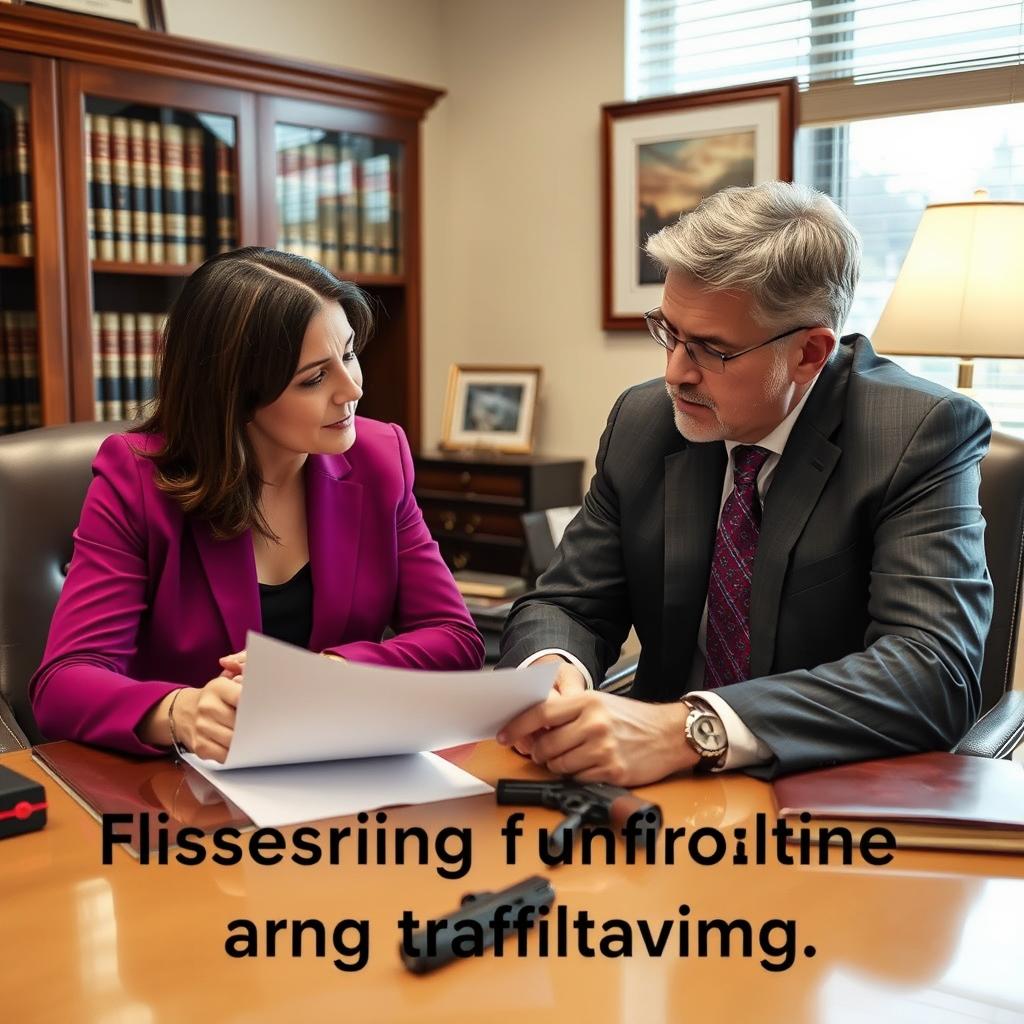
Possession of Firearms in Drug Trafficking Crime lawyer Botetourt County, VA
Federal charges for possessing firearms in connection with a drug trafficking offense carry severe consequences under United States law. If you are facing an allegation involving a firearm and a controlled substance offense in Botetourt County, Virginia, the matter will proceed in the U.S. District Court for the Western District of Virginia, where the United States Attorney’s Office prosecutes actively and sentencing is governed by the Federal Sentencing Guidelines. A conviction can expose you to mandatory minimum prison terms that dramatically exceed the penalties available in state court, and there is no parole in the federal system. Mr. Sris, Owner and Founder of Law Offices Of SRIS, P.C., and the firm’s Of Counsel attorneys concentrate on defending individuals against federal criminal charges, including those arising under 21 U.S.C. § 841 and 18 U.S.C. § 924(c). To discuss your situation and learn how we approach these cases, call (888) 437‑7747. Law Offices Of SRIS, P.C. – Advocacy Without Borders.
What Federal Firearms in Drug Trafficking Charges Mean in Botetourt County
In Botetourt County, a federal drug trafficking case that also involves a firearm is not handled by the local General District Court. Instead, it falls under the jurisdiction of the U.S. District Court for the Western District of Virginia, with the Roanoke division serving as a primary venue. The charging statutes—principally 21 U.S.C. § 841 (drug trafficking) and 18 U.S.C. § 924(c) (possessing or carrying a firearm during and in relation to a drug trafficking crime)—operate together to create a multi‑layered penalty structure. A conviction under the drug statute itself already carries mandatory minimums tied to drug type and quantity; adding a § 924(c) firearm count carries its own consecutive mandatory sentence, often starting at five years and increasing significantly for brandishing or discharging the weapon. Because federal law prohibits parole, any term of incarceration must be served at a high percentage of the sentence imposed.
The local federal court follows the United States Sentencing Guidelines, which are advisory but strongly influence the sentence judges impose. In practice, prosecutors in the Western District of Virginia routinely bring superseding indictments that include firearm enhancements when evidence supports such a charge. Early engagement with experienced federal defense counsel is critical—decisions made at the detention hearing, during grand jury proceedings, or immediately after arrest can shape the entire trajectory of the case. Mr. Sris and the firm’s Of Counsel attorneys appear regularly in the Western District and are familiar with the procedures, pretrial release considerations, and sentencing advocacy that these matters demand.
How Mr. Sris and the Firm’s Of Counsel Attorneys Handle Federal Firearms in Drug Trafficking Cases
Defending a federal charge that combines drug trafficking and firearm possession requires a strategy that addresses the mandatory‑minimum framework from the earliest stages. Mr. Sris and the firm’s Of Counsel attorneys begin by examining how law enforcement obtained the evidence—whether the search of a vehicle, residence, or person complied with Fourth Amendment standards, and whether any statements were obtained in violation of Miranda or the Sixth Amendment right to counsel. Where procedural defects exist, a motion to suppress can exclude key evidence and undermine the prosecution’s ability to prove the firearm‑drug nexus that triggers § 924(c).
If the government’s case survives pretrial challenges, defense counsel prepares for the possibility of trial while simultaneously engaging in discussions regarding potential dispositions that avoid the full weight of the mandatory minimums. In many drug‑firearm cases, the ability to negotiate a plea to a single count that does not carry the § 924(c) stacking enhancement can reduce exposure by years. Even when a plea is entered, experienced sentencing advocacy under the Guidelines can make a material difference: arguments related to acceptance of responsibility, the safety‑valve provision, and substantial assistance under § 5K1.1 or Rule 35 may lead to a sentence below the mandatory floor. The firm’s approach is to explore every angle that might favorably resolve the matter while keeping the client informed at each stage.
About Mr. Sris and the Firm’s Of Counsel Attorneys
Mr. Sris founded Law Offices Of SRIS, P.C. in 1997 and serves as its Owner and Founder. A former prosecutor, he understands how the government constructs a federal drug‑firearm case and what it takes to challenge such charges. Mr. Sris testified before the Virginia House Courts of Justice Committee in support of 2019 HB 635 (chief patron Del. David Bulova). He is admitted to practice in Virginia, Maryland, the District of Columbia, New Jersey, and New York. Alongside Mr. Sris, the firm’s Of Counsel attorneys bring extensive combined legal experience. Results may vary.
The firm’s Shenandoah location serves clients throughout western Virginia, including Botetourt County and the communities of Fincastle, Daleville, Troutville, Blue Ridge, and Eagle Rock. Meetings are by appointment; call (888) 437‑7747 to schedule a consultation.
Frequently Asked Questions
Do I need a federal criminal defense lawyer in Botetourt County, Virginia?
Yes, immediately, if you are being investigated for or have been charged with a federal drug‑firearm offense in Botetourt County. Federal cases progress differently than state cases, with investigations often conducted by agencies including the DEA, ATF, or FBI. The U.S. Attorney’s Office for the Western District of Virginia prosecutes these matters, and the procedural rules—from initial appearance to sentencing—are distinct. Early representation before an indictment is often the most effective way to influence the direction of the case. Contact Law Offices Of SRIS, P.C. at (888) 437‑7747 to discuss your situation.
What is the difference between state and federal firearms‑in‑drug‑trafficking charges?
Federal charges are prosecuted by the United States Attorney, carry generally longer sentences, and cannot be reduced by parole; Virginia state charges are handled in local courts and may permit parole eligibility. A state charge for possessing a firearm during a drug offense may be a separate felony or a sentencing enhancement, but federal law under § 924(c) imposes mandatory consecutive sentences that stack on top of the drug sentence. The procedural rules, discovery obligations, and sentencing guidelines in federal court are fundamentally different from state practice. Defendants facing federal charges in Botetourt County will appear in the U.S. District Court for the Western District of Virginia, not the General District Court.
How do federal sentencing guidelines work in Botetourt County, Virginia?
Federal sentencing at the U.S. District Court for the Western District of Virginia follows the U.S. Sentencing Guidelines, a point‑based system that calculates a recommended range using the offense level and criminal history category. While the guidelines are advisory since United States v. Booker (2005), judges in the Western District give them significant weight. Mandatory minimum statutes—common in drug‑firearm cases—override downward departures in many circumstances. However, mechanisms such as acceptance of responsibility, substantial assistance under § 5K1.1, and safety‑valve eligibility can reduce the sentence below the mandatory floor. For guidance on how these factors may apply, reach Law Offices Of SRIS, P.C. at (888) 437‑7747.
What should I do if I am facing possession of firearms in drug trafficking charges in Virginia?
If you are facing these charges, contact a federal criminal defense attorney immediately, refrain from discussing the case with anyone other than your lawyer, and preserve any documents or information that may be relevant to your defense. Federal agents may have already interviewed you or executed a search warrant; continuing to speak without counsel can seriously damage your position. Prompt legal guidance helps protect your rights during the investigation, detention hearing, and any grand jury proceeding. To discuss the details of your matter, call Law Offices Of SRIS, P.C. at (888) 437‑7747.
How does a Virginia lawyer defend against possession of firearms in drug trafficking crime charges?
Defense strategies typically involve challenging the legality of the search and seizure, contesting the government’s proof that the firearm was possessed “in furtherance” of a drug trafficking crime, and actively negotiating to avoid the mandatory stacking of § 924(c) enhancements. A motion to suppress evidence can be effective if law enforcement conducted a warrantless stop or search without valid consent or probable cause. Where the firearm was found in a vehicle or residence that multiple people accessed, constructive possession can be challenged. Sentencing advocacy under the safety‑valve and substantial‑assistance provisions may also reduce the eventual sentence. Each case turns on its specific facts, and an experienced federal defense attorney can identify the issues with the greatest chance of success.
Related resources:
- Federal Criminal Lawyer Fairfax County, VA
- Federal Criminal Lawyer Fairfax City, VA
- Federal Criminal Lawyer Falls Church, VA
- Federal Criminal Lawyer Prince William County, VA
- Federal Criminal Lawyer Manassas, VA
Official sources: U.S. District Court for the Western District of Virginia | U.S. Sentencing Guidelines | 21 U.S.C. § 841
Attorney advertising. Prior results do not guarantee a similar outcome. Results may vary.
Case results depend on a variety of factors unique to each case.