
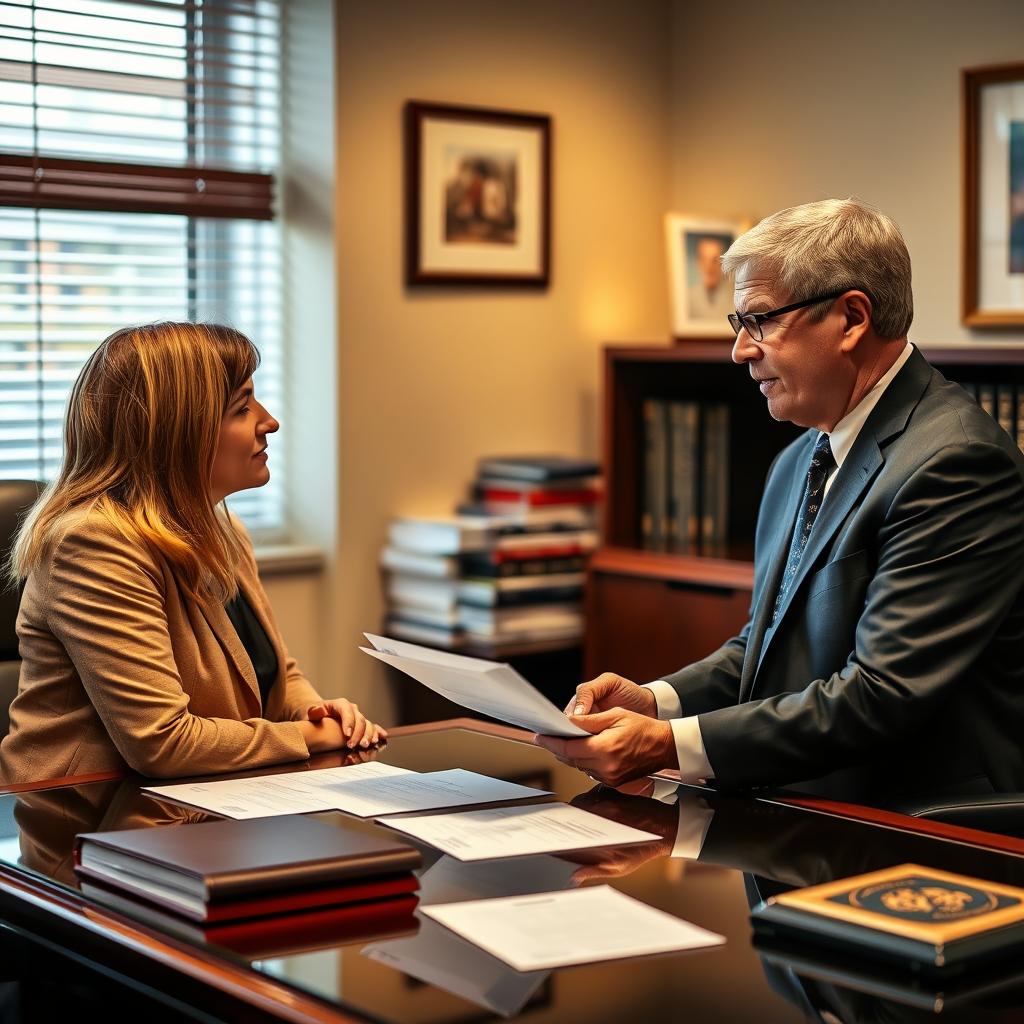
Retaliating Against a Witness lawyer Bedford County, VA
Federal charges of retaliating against a witness—whether brought under the obstruction-of-justice provisions of 18 U.S.C. § 1503, the witness-tampering and retaliation prohibitions of 18 U.S.C. § 1512, or the perjury statutes of 18 U.S.C. §§ 1621‑1623—are among the most actively prosecuted offenses in the U.S. District Court for the Western District of Virginia. If you are under investigation or facing indictment for conduct that federal prosecutors are characterizing as witness retaliation in Bedford County, Virginia, an early and clear-eyed assessment of the prosecution’s theory and the evidence it relies on is essential. The Shenandoah location of Law Offices Of SRIS, P.C. represents individuals throughout the Western District, including the Roanoke division where Bedford County matters are heard. Reach the firm at (888) 437‑7747 to request a consultation.
What Retaliating Against a Witness Means in Bedford County
Federal witness-retaliation prosecutions in Bedford County are not brought in the state courts that handle traffic or misdemeanor cases. Instead, the U.S. Attorney’s Office for the Western District of Virginia pursues these charges in federal court—most often in the Roanoke division of the U.S. District Court for the Western District of Virginia, located at 210 Franklin Road SW. The case is investigated by a federal agency, typically the FBI, and proceeds under the Federal Rules of Criminal Procedure and the U.S. Sentencing Guidelines.
Retaliation against a witness is treated as an attack on the integrity of the judicial system itself. Federal law prohibits a wide range of conduct: threatening, intimidating, or coercing a witness; causing physical harm; or taking any action designed to prevent a witness from testifying, providing information to law enforcement, or otherwise participating in an official proceeding. The statutes are broad enough that a single misinterpreted conversation or gesture can become the basis for a federal indictment. Because the U.S. Attorney’s Office typically brings such charges only after an extensive investigation, a person learning of the investigation for the first time is often already facing a well-developed case file.
Bedford County residents and those with ties to the Blue Ridge corridor—ranging from the town of Bedford and Forest to the communities around Smith Mountain Lake and Moneta—should understand that a federal witness‑retaliation charge is not a simple statutory violation. It carries no possibility of parole, and the advisory sentencing guidelines, while not mandatory since United States v. Booker, heavily influence the actual sentence a federal judge in the Western District will impose. Federal prosecutors in this district have a reputation for thorough preparation, and they routinely seek to protect the rights of the witness they claim was the target of intimidation.
How Mr. Sris and the Firm’s Of Counsel Attorneys Handle Federal Retaliation Cases
Mr. Sris, the Owner and Founder, approaches every federal criminal matter with the perspective of a former prosecutor and an attorney who has practiced across five jurisdictions since 1997. When a retaliation charge is under investigation, the initial focus is on preventing an indictment where possible—engaging with the Assistant U.S. Attorney early, presenting exculpatory evidence, and challenging the narrative that the conduct constituted a criminal threat rather than, for example, a heated exchange or a legitimate attempt to obtain information for the defense of an underlying case. If an indictment is returned, the defense shifts to scrutinizing the government’s evidence under the disclosure obligations of Brady and Giglio, contesting the credibility of the alleged victim‑witness, and preparing for trial in a federal forum where local practice and the presiding judge’s procedures matter greatly.
The firm’s Of Counsel attorneys collaborate on every facet of the case: reviewing grand‑jury transcripts, analyzing electronic communications and physical evidence, engaging attorneys where the government’s case rests on audio recordings or digital records, and litigating pre‑trial motions that can shape the scope of the evidence the jury hears. In the Western District, the discovery process and the scheduling of suppression and detention hearings follow a rhythm that counsel experienced in this courthouse understands. The goal throughout is to identify the strongest defensive position—whether that means negotiating a resolution that limits exposure or taking the matter to trial where the government’s burden of proof cannot be met.
About Mr. Sris and the Firm’s Of Counsel Attorneys
Mr. Sris, Owner and Founder of Law Offices Of SRIS, P.C., is a former prosecutor who has concentrated his practice on criminal defense for more than a quarter‑century. He testified before the Virginia House Courts of Justice Committee in support of 2019 HB 635 (chief patron Del. David Bulova). Mr. Sris and the firm’s Of Counsel attorneys bring extensive combined legal experience. Results may vary.
The firm’s Of Counsel attorneys include practitioners with deep backgrounds in federal criminal procedure, evidence, and trial advocacy. Together with Mr. Sris, they provide representation that draws on both prosecutorial insight and years of courtroom practice in the federal courts of the Western District. No attorney in the firm is identified as a attorney by any certifying body, but the team’s collective experience in federal matters is substantial.
Frequently Asked Questions
What is the difference between state and federal retaliation charges?
Federal retaliation charges are prosecuted by the U.S. Attorney’s Office with generally harsher penalties and no parole, unlike state obstruction charges. State-level charges for intimidating a witness are handled in Virginia General District or Circuit Courts, while federal retaliation charges proceed under 18 U.S.C. § 1503 or § 1512 in the U.S. District Court for the Western District of Virginia. The federal system applies the U.S. Sentencing Guidelines, and a conviction almost always results in a federal prison sentence served without the possibility of parole.
What should I do if I am facing witness retaliation charges in Bedford County?
Contact a federal criminal defense attorney immediately and do not discuss the case with anyone except your lawyer. Preserve all relevant documents, messages, and recordings. Federal investigators may already have gathered evidence, so any statement you make to family, colleagues, or on social media can be used against you. Law Offices Of SRIS, P.C. provides consultations by appointment—call (888) 437‑7747 to discuss your situation.
How do federal sentencing guidelines apply to a witness retaliation charge?
Federal sentencing for witness retaliation in the Western District follows the U.S. Sentencing Guidelines, which calculate a sentencing range based on the offense level and criminal history category. While the guidelines are advisory, a judge must still consider them carefully. Obstruction‑related offenses often carry a base offense level that can be increased if the conduct involved a threat of physical force or if the proceedings being obstructed were particularly serious. A defendant may also be eligible for a reduction through acceptance of responsibility, provided certain procedural steps are followed.
Can a witness retaliation charge be dismissed?
Yes, a charge can be dismissed if the government’s evidence is insufficient or obtained in violation of constitutional protections, but these outcomes are case‑specific. Motions to suppress evidence, to dismiss an indictment for improper grand‑jury proceedings, or to challenge the legal sufficiency of the charge can lead to a dismissal. In the Western District, early engagement with the U.S. Attorney’s Office—before an indictment—can sometimes result in the government declining to bring charges altogether.
Do I need a federal criminal defense lawyer for a retaliation charge in Bedford County?
Yes, immediately. Federal retaliation cases in the Western District of Virginia are handled by the U.S. Attorney’s Office with extensive federal investigative resources, and state‑court experience does not translate. Federal practice involves distinct rules of procedure, discovery, and sentencing. An attorney with federal court experience can evaluate the prosecutor’s case, negotiate under federal guidelines, and, if necessary, try the case before a federal jury. Contact Mr. Sris and the firm’s Of Counsel attorneys at (888) 437‑7747 to schedule a consultation.
What are the potential penalties for retaliating against a witness under federal law?
Penalties for witness retaliation under 18 U.S.C. § 1503 can include up to 10 years’ imprisonment—or 20 years if the offense involves a killing—plus substantial fines and a term of supervised release. Under 18 U.S.C. § 1512, the maximum sentence may be as high as 20 years depending on the subsection charged. Because the federal system abolished parole, anyone convicted serves the vast majority of the sentence imposed. The precise punishment depends on the specific statute, the defendant’s role, and the advisory guideline range calculated by the court.
Also serving:
Fairfax County Federal Criminal Lawyer |
Fairfax City Federal Criminal Lawyer |
Falls Church Federal Criminal Lawyer |
Prince William County Federal Criminal Lawyer |
Manassas Federal Criminal Lawyer
Attorney advertising. Prior results do not guarantee a similar outcome.
Results may vary.
Case results depend on a variety of factors unique to each case.