
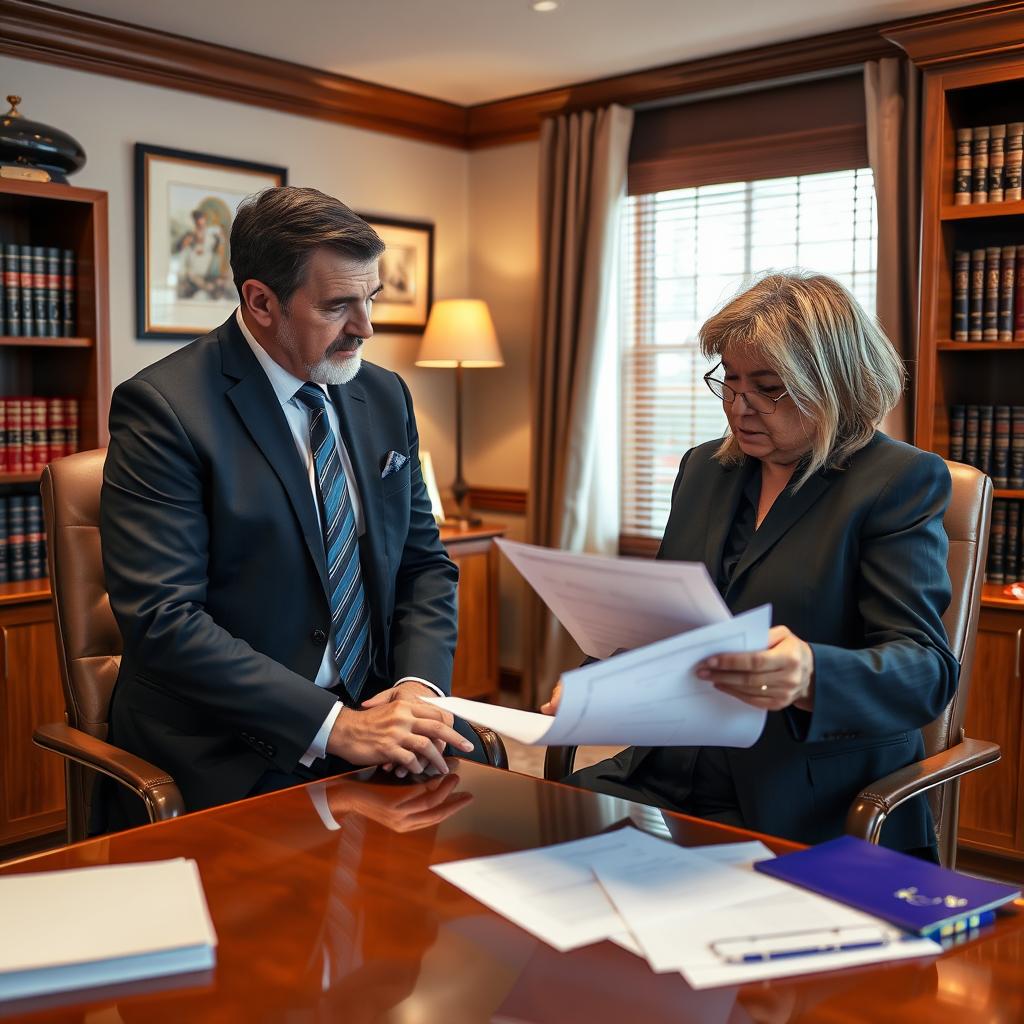
Service Member Divorce Lawyer Bedford County, VA
For military members and their spouses, divorce in Bedford County, Virginia involves both state family law under the Virginia Code and federal protections under the Servicemembers Civil Relief Act (SCRA). At Law Offices Of SRIS, P.C., Mr. Sris and his Of Counsel team represent service members and civilian spouses throughout the Twenty‑fourth Judicial District, including cases filed at the Bedford County Circuit Court. Whether you are stationed nearby, deployed overseas, or a spouse seeking a divorce from a military member, the procedures for dividing military pensions, determining custody while a parent is on active duty, and complying with SCRA stay requirements call for an attorney who practices regularly in this area. Mr. Sris, Owner and Founder of the firm, has been practicing since 1997 and appears regularly in Bedford County courts. To discuss your situation, reach Law Offices Of SRIS, P.C. at (888) 437‑7747. Law Offices Of SRIS, P.C. – Advocacy Without Borders.
What Service Member Divorce Means in Bedford County
A service member divorce in Bedford County, Virginia is a dissolution of marriage where at least one spouse is a member of the uniformed services. Virginia law governs the grounds for divorce (Va. Code § 20‑91), property division (Va. Code § 20‑107.3), custody, and support. At the same time, the SCRA (50 U.S.C. § 3901 et seq.) creates special procedural safeguards for active‑duty service members. In Bedford County, the Circuit Court at 123 East Main Street, Suite 202, Bedford, VA 24523 handles the divorce, equitable distribution, and spousal support. The Juvenile and Domestic Relations District Court addresses standalone custody, visitation, child support, and protective orders when no divorce is pending. The firm’s Shenandoah location serves clients throughout Bedford, Forest, Smith Mountain Lake, and Moneta.
Virginia allows both fault‑based and no‑fault divorce. A service member who has been a resident and domiciliary of Virginia for at least six months may file in Bedford County Circuit Court, or the non‑military spouse may file if the military spouse is stationed in Virginia. The SCRA permits a service member to request a stay of proceedings for at least 90 days if military duties materially affect the ability to respond. Division of a military pension is controlled by both Virginia’s equitable‑distribution statute and the federal Uniformed Services Former Spouses’ Protection Act. Because the SCRA can affect default‑judgment rules and property‑division timelines, a lawyer experienced with military‑divorce cases in Bedford County can help navigate these layered requirements.
How Mr. Sris and His Of Counsel Handle Service Member Divorce Cases
Mr. Sris and the firm’s Of Counsel attorneys approach each service member divorce with an understanding of both the state procedural framework and the unique demands of military service. The process generally begins with a consultation to determine which spouse meets the Virginia residency requirement and what grounds for divorce apply—whether a no‑fault separation of six months (with a signed separation agreement and no minor children) or one year, or a fault ground such as adultery. In Bedford County, the divorce complaint is filed in the Circuit Court; the clerk’s filing fee varies, and service of process is typically arranged through the sheriff or a private process server.
If the service member is deployed or stationed elsewhere, the SCRA may provide a stay of proceedings, and the court must appoint an attorney to represent an absent service member before a default can be entered. Discovery, including valuation of the marital share of a military pension under Va. Code § 20‑107.3, follows. Temporary support and custody issues may be addressed pendente lite. Throughout the matter, Mr. Sris and his Of Counsel work to resolve outstanding issues through negotiation or, when necessary, litigation. Because every case is different, no specific timeline or outcome is promised; the goal is a fair resolution that accounts for the realities of military life.
About Mr. Sris and His Of Counsel
Mr. Sris, Owner and Founder of Law Offices Of SRIS, P.C., is a former prosecutor who has been practicing since 1997. He is admitted in Virginia, Maryland, the District of Columbia, New Jersey, and New York. Mr. Sris testified before the Virginia House Courts of Justice Committee in support of 2019 HB 635 (chief patron Del. David Bulova). The firm’s Of Counsel attorneys bring experience from a variety of backgrounds, including former law enforcement and decades of courtroom litigation. Together, Mr. Sris and his Of Counsel team bring extensive combined legal experience to service member divorce cases in Bedford County and across Virginia. Results may vary.
Frequently Asked Questions
How long does a service member divorce take in Bedford County?
An uncontested divorce with a signed separation agreement can often be completed within two to four months after filing in the Bedford County Circuit Court; a contested divorce typically takes nine to eighteen months, depending on the issues in dispute. Service member divorces may take longer if the SCRA stay is invoked or if the military member is deployed. The mandatory separation period under Va. Code § 20‑91 must be met before a no‑fault divorce can be granted—six months with a signed agreement and no minor children, otherwise one year. Complex property division, especially involving a military pension, can extend the timeline. Each case is different; for guidance on your specific circumstances, reach Law Offices Of SRIS, P.C. at (888) 437‑7747.
How much does a divorce cost in Bedford County?
The Bedford County Circuit Court filing fee for a divorce complaint varies, and service of process through the sheriff’s department costs about $12; using a private process server generally runs $50 to $100. Beyond court fees, the cost depends on whether the divorce is contested, whether a guardian ad litem is needed for custody matters, and whether attorneys such as forensic accountants are engaged to value military retirement assets. Mediation fees usually range from $100 to $300 per hour per party. Mr. Sris and his Of Counsel team offer consultations to discuss the likely range of fees in a particular case. Each matter is unique, and past results do not guarantee a similar outcome.
Is Virginia a community property state?
No; Virginia is an equitable‑distribution state. Under Va. Code § 20‑107.3, the court divides marital property fairly but not necessarily equally, considering eleven statutory factors. Separate property—assets a spouse brought into the marriage or received as a gift or inheritance—remains with that spouse. In a service member divorce, the marital share of a military pension is divided according to the formula established by the USFSPA, and the court may order direct payment from the Defense Finance and Accounting Service. The Bedford County Circuit Court has exclusive jurisdiction over property division in a divorce case.
How is child custody decided in a Bedford County service member divorce?
Custody and visitation in Bedford County are decided based on the best interests of the child under Va. Code § 20‑124.3, which requires the court to weigh ten factors. Those factors include the child’s relationship with each parent, each parent’s role in the child’s life, and any history of abuse. A parent’s military service, including deployment, is a factor the court may consider, but Virginia law prohibits using deployment alone as the sole reason to deny custody. The Juvenile and Domestic Relations District Court handles standalone custody actions; within a divorce, the Circuit Court decides custody as part of the final decree. For immediate questions about your parenting situation, contact Mr. Sris and his Of Counsel at (888) 437‑7747.
What are the grounds for divorce in Virginia?
Virginia law provides both no‑fault and fault grounds. Under Va. Code § 20‑91, a no‑fault divorce may be granted after one year of continuous separation, or after six months if the parties have no minor children and have entered into a written separation agreement. Fault grounds include adultery, cruelty, willful desertion for one year, and felony conviction resulting in imprisonment for more than one year. Adultery, if proven, eliminates any waiting period. Service members may use either ground; the SCRA does not alter the substantive grounds. A service member’s absence due to military orders does not interrupt the separation period as long as the intent to separate remains.
Can a service member stop a divorce while deployed?
Yes, a service member on active duty can request a stay of divorce proceedings under the Servicemembers Civil Relief Act. The SCRA entitles a service member to an initial stay of at least 90 days if military service materially affects the ability to appear or defend. The request must be made in writing and include a statement from the commanding officer. Additional stays may be granted at the court’s discretion. This protection applies whether the service member is the plaintiff or defendant. Even if the divorce is uncontested, a deployment‑related stay can affect the timeline. Mr. Sris and his Of Counsel can assist service members in filing the appropriate stay motion in the Bedford County Circuit Court.
Related family law pages in Virginia:
Fairfax County family law lawyer |
Prince William County family law lawyer |
Manassas family law lawyer
Virginia primary sources:
Virginia Code Title 20 — Domestic Relations |
Bedford County Circuit Court
Attorney advertising. Prior results do not guarantee a similar outcome.
Case results depend on a variety of factors unique to each case.